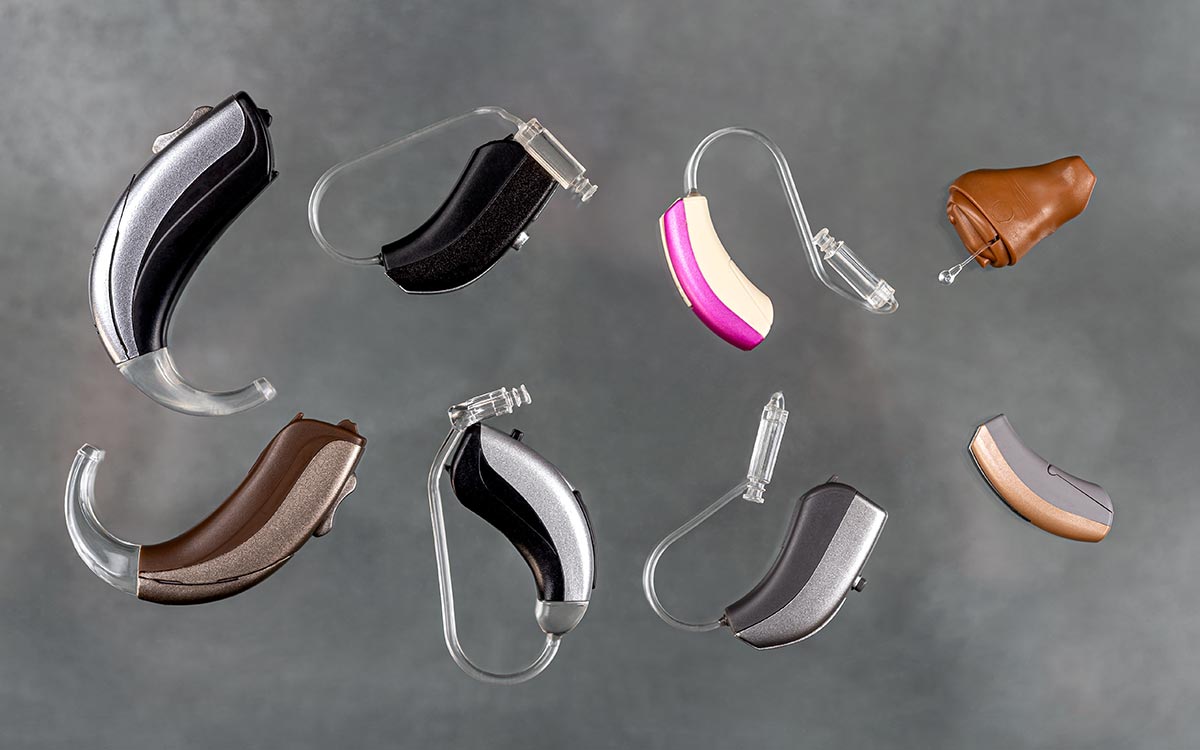
Choosing the right hearing aid can be a daunting task, given the wide array of styles, sizes, and technological features available in modern devices. However, an expert hearing solution exists for every person’s unique needs and daily habits. It’s just an issue of locating it!
Feeling certain about your choice begins with knowing how different hearing aids function and compare. We are planning to study the primary styles available today to help you understand what sets each option apart.
In-the-Canal (ITC) Hearing Aids
Basic Overview:
ITC hearing aids rest partly in the ear canal, with an inconspicuous portion visible at the outer ear.
Key Selling Features:
- Provides a subtle look compared to traditional styles
- Individualized molding ensures long-term wearing comfort
- Designed to address low to mid-range hearing impairments
First-time wearers frequently gravitate toward ITC aids because they strike a perfect compromise between size and performance.
Ultra-Discreet Invisible-in-Canal (IIC) Aids
The Idea:
As the most compact custom selection, IIC aids represent the smallest available style. They are placed deep within the canal to remain hidden from view.
User Benefits:
- The best option for patients prioritizing appearance
- Natural sound quality due to mic placement
- Lightweight and easy
The small form size of IIC models makes them perfect for mild hearing loss and anyone who values a stealthy hearing solution.
ITE (In-the-Ear) Model Summary
What they are:
These models occupy either the full or bottom half of the outer ear bowl. They are custom-made to match the shape of your ear.
Why people choose them:
- The increased surface area offers space for extra functionality and extended power
- Provides a more manageable process for those who struggle with tiny accessories
- Effective for mild to severe hearing loss
The all-in-one nature of the ITE design makes it a favorite for those who dislike behind-the-ear equipment.
BTE (Behind-the-Ear) Basics
Operation:
BTE hearing aids sit securely behind the ear. Audio is sent through a thin tube or a personalized mold in the canal.
Why users choose them:
- Highly versatile and durable
- Provides a wide selection of amplification suitable for nearly any user
- Provide room for advanced features and rechargeable batteries
BTE devices are an excellent option for individuals seeking reliability, ease of use, and strong amplification.
RIC (Receiver-in-Canal) Overview
Mechanical Setup:
In a modern model, the speaker is detached from the main housing and placed inside the canal via an ultra-fine wire.
Why they are popular:
- Highly natural sound quality
- Small, lightweight, and comfortable
- RIC technology is highly flexible for many different audiogram profiles.
RIC devices are one of today’s most popular models, thanks to their blend of comfort, aesthetics, and performance.
Long-Term “Set and Forget” Hearing Aids
Overview:
These devices are placed far in the ear canal by an audiology professional and can stay in place for several weeks at a time.
Why individuals select them:
- Zero routine insertion or removal
- Nearly hidden
- Built to endure the rigors of sleep, exercise, and showering without being removed
If you want an auditory solution that requires zero daily thought, the extended-wear style is perfect.
Smart Hearing Aids with Bluetooth
Functionality:
These are modern units fitted with radio technology to sync with your personal electronics and televisions.
Digital Benefits:
- Allows for sharp voice calls and media streamed directly to the device
- Provides an unobtrusive way to manage your hearing environment from your mobile screen
- Enhances daily life by making technology interaction seamless and clear
This wireless technology is located in most modern behind-the-ear and in-the-canal models.
Understanding Middle-Ear Implant Systems
Procedure Info:
This technology involves an operative procedure to place a device that physically stimulates the bones of the middle ear.
Medical Reasons:
- Serves as a critical substitute for those who find no success with traditional amplification
- Great for users who suffer chronic irritation from standard molds
Middle-ear implants are usually recommended only after a full evaluation by an ENT specialist.
Your Path to Better Hearing
Since each hearing aid design has distinct assets, the best choice is based on your specific hearing needs, your daily activities, and your aesthetic goals. By visiting an expert, you can investigate various models and see which one feels most natural to you.
Begin your path to better sound by setting up a hearing test now. It is the most important move you can make toward an increasingly vibrant and confident life.
Sources:
https://www.mayoclinic.org/diseases-conditions/hearing-loss/in-depth/hearing-aids/art-
20044116
https://www.hearinglife.com/hearing-aids/types
https://www.nidcd.nih.gov/health/hearing-aids
