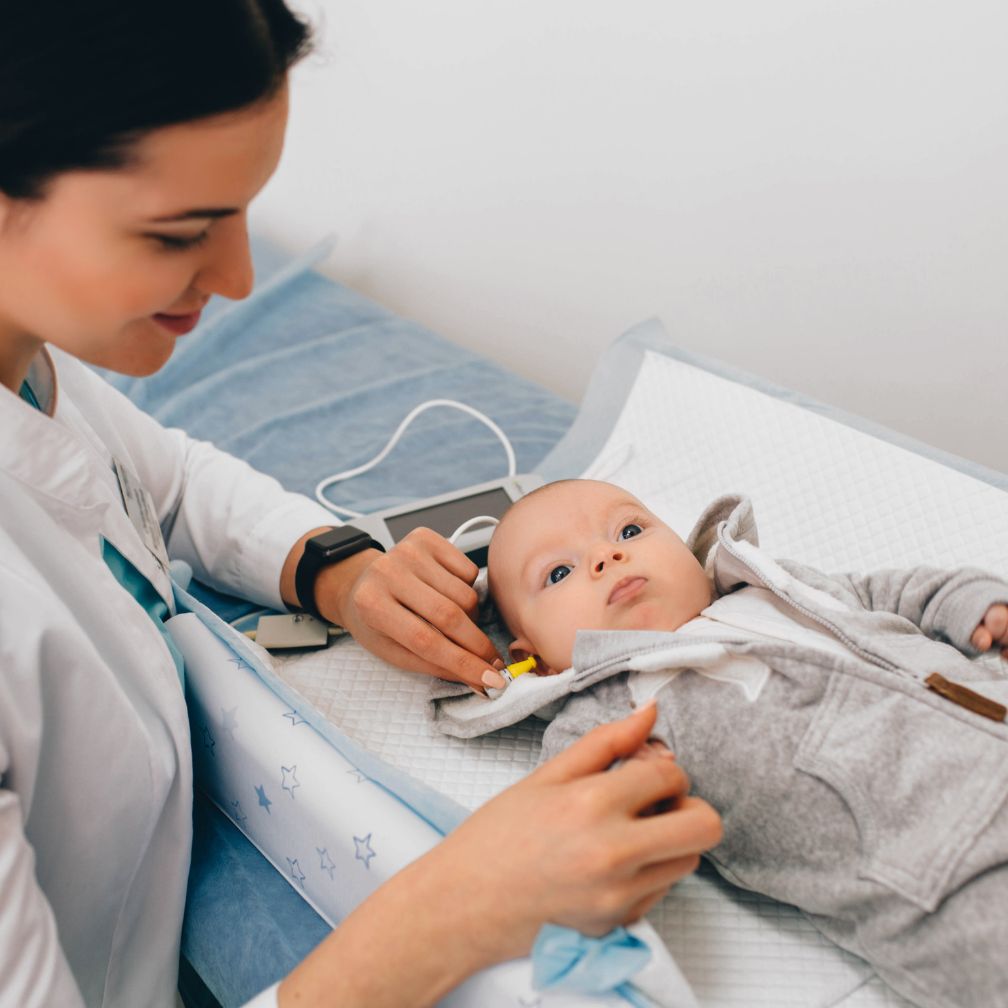
For parents holding a newborn, getting a diagnosis of early auditory impairment often feels distressing and daunting. Yet the optimistic truth is that via rapid screening and support, young children facing auditory deficits can realize profound developmental success. Indeed, these children can master speech, interactive capabilities, and rich relationships across their environment, bringing about a truly fulfilling life!
Utilizing individual hearing aids alongside surgical cochlear implants provide two highly successful approaches for assisting infants with hearing loss. In the following segment, we detail their functional mechanisms and clarify how to select the ideal match for your infant.
Demystifying Hearing Deficits in Newborns
Early hearing loss in young infants often occurs because of various root causes, such as:
- Inherited genetic factors (even in the absence of a documented family history)
- Maternal pathogen exposures including cytomegalovirus(CMV) and rubella agents
- Severe delivery difficulties, such as acute oxygen deprivation or preterm birth
- Specific intensive care medications administered in dedicated neonatal care facilities
Which effort serves as the single most essential step? Prompt diagnostic confirmation. As a result, babies in American medical centers receive auditory checks before leaving the care nursery. Experienced pediatric audiologists maintain the standardized “1-3-6” care benchmark:
- Baseline hearing check administered within 30 days of birth
- Fully diagnosed by 3 months
- Dedicated treatment (utilizing medical units or targeted speech therapy) launched before 180 days
Meeting these vital checkpoints offers infants their highest potential for speech acquisition, language mastery, and brain development. If you require additional direction on these clinical screenings, your personal pediatrician stands eager to help!
Hearing Aids for Infants
In infants identified with mild to severe auditory loss, digital hearing aids generally constitute the initial therapeutic step. These unobtrusive, external units amplify acoustic waves, assisting infants in capturing spoken communication and everyday acoustic cues more sharply.
Infant-adapted hearing aids function as:
- Exceptionally safe for use on newborns merely a few weeks old
- Manufactured with pliable, gentle custom molds that adjust during early physical growth
- Built with secure, tamper-resistant battery latches and specialized pediatric safety components
- Precisely adjusted by a pediatric hearing professional to match your child’s exact hearing needs
As your child matures, hearing devices require routine recalibration to guarantee physical comfort and optimal performance.
Understanding Cochlear Implantation for Babies
Where a young infant shows severe to profound sensorineural loss and derives insufficient benefit from wearable aids, a cochlear implant stands as a primary recommendation. Differing from external acoustic hearing aids, cochlear implant systems:
- Need to be installed via an outpatient surgical procedure within the patient’s inner ear
- Directly bypass compromised areas of the inner ear anatomy
- Process acoustic energy into clear electrical signals that stimulate hearing nerve pathways directly
Precision-implanted cochlear devices remain:
- Officially FDA-sanctioned for pediatric candidates beginning around 9 to 12 months
- Maximally beneficial when coupled with early auditory-verbal therapy and strong family involvement
- Prescribed only after comprehensive diagnostic assessments by a certified audiologist and otolaryngologist
This diagnostic phase features radiological imaging, comprehensive audiometric testing, and detailed consultations regarding anticipated long-term progress.
Comparing Hearing Aids and Cochlear Implants: Key Differences
- Mild to severe hearing loss: Hearing Aids; Severe to profound hearing impairment calls for Cochlear Implants
- Non-Invasive wearable application: Hearing Aids; Surgical insertion required: Cochlear Implants
- Standard sound amplification logic: Hearing Aids; Direct conversion to electrical signals: Cochlear Implants
- Starts at Infancy: Hearing Aids; Starts at 9-12 Months: Cochlear Implants
Summary Thoughts: Supporting Your Child’s Hearing Journey
If your newborn faces a confirmed hearing impairment diagnosis, remember that proven treatment choices alongside extensive professional backing. With the help of pediatric hearing specialists, many children go on to develop language skills that are on par with their peers.
No matter if your infant proves better suited for conventional hearing aids or advanced cochlear implants, early management delivers permanent lifelong benefits.
Are you looking for clarity regarding your infant’s hearing development? Call our clinic today to schedule a thorough assessment and individualized management strategy.
