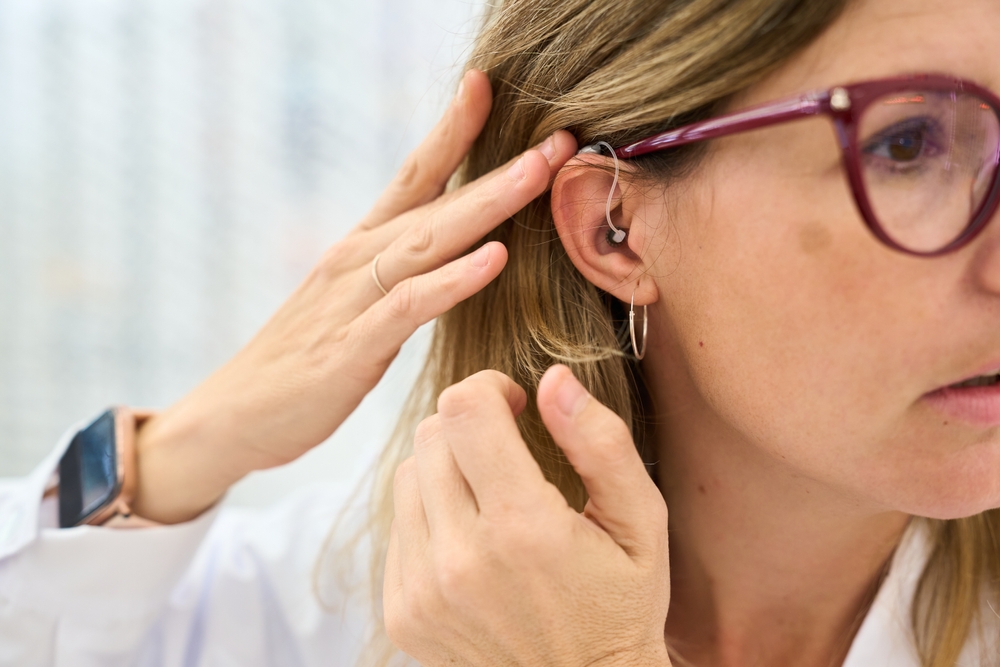
Many people delay getting hearing aids because they don’t think they’ll like how they look or feel. For decades, legacy acoustic amplifiers were cumbersomely large, highly conspicuous, and culturally tethered to physical senescence. In various scenarios, patients expressed fear that wearing an obvious device would cause peers to omit them from casual conversations due to perceived listening limitations.
Consequently, this outdated, negative stereotype persists, preventing numerous individuals from seeking professional care. However, contemporary medical engineering has ensured that current hearing solutions look and function in a completely unexpected manner. Ongoing innovations in cosmetic engineering mean today’s options are ultra-small, seamlessly comfortable, and beautifully hidden from public view.
If you’ve been putting off treatment because of how hearing aids used to look, it might be time to take a fresh look at what’s available today!
The Outdated Devices of Your Imagination Have Been Replaced
If you close your eyes to conceptualize a hearing system, your mind likely crafts a picture of a prominent, cumbersome unit draped behind the ear. If that description matches your mental model, your perceptions are anchored in the primitive analog technology of the late twentieth century.
Since then, the entire category has evolved. Advances in miniaturization, design, and digital technology have completely reshaped what hearing aids look like today. They’re smaller, sleeker, and designed to blend in (or disappear entirely).
Numerous modern instruments are inserted completely within the ear canal structure, rendering them undetectable throughout standard daily dialogue. Alternative styles occupy a tiny footprint behind the pinna, utilizing ultra-light materials and customizable color palettes to match hair or skin tones perfectly.
Primary Hearing Aid Styles, From Invisible to Barely There
For those investigating what these advanced acoustic tools look like in real life, consider this straightforward guide:
Deep Canal Solutions: Invisible-in-Canal (IIC)
This specific configuration offers the highest degree of user discretion. The IIC style fits exclusively within the deep internal canal and is built using a custom impression of the patient’s ear passagographic anatomy. Spoken interactions at arm’s length occur without anyone realizing a medical device is present. They’re a popular choice for people with mild to moderate hearing loss who prioritize subtlety.
Receiver-in-canal (RIC) / Receiver-in-the-ear (RITE)
This particular layout has become the benchmark standard for contemporary hearing health restoration. A tiny component sits behind the ear, connected by a nearly invisible wire to a small speaker in the ear canal. From an aesthetic standpoint, they look very similar to trendy consumer tech or modern bluetooth monitors. The vast majority of peers will fail to perceive the apparatus unless conducting a highly deliberate close-up inspection.
Streamlined Behind-the-Ear (BTE) Systems
These units reside entirely behind the external ear, providing a slightly larger chassis that is still infinitely more elegant than historical variations. Frequently utilized to remediate severe-to-profound auditory loss, they maximize gain and processing capability while maintaining a highly professional, low-profile aesthetic.
The key takeaway: Today’s discreet hearing aids are designed to fit your life, not announce themselves.
Modern Hearing Aids: Looking Better and Doing a Lot More
The evolution of these medical devices encompasses much more than a superficial face-lift. Present-day models perform like advanced personal audio computers instead of basic medical listening aids. Many variants integrate high-speed Bluetooth protocols, allowing you to route phone calls, podcasts, or multimedia audio straight to your ears without external headphones.
Through proprietary mobile apps, patients can effortlessly adjust acoustic thresholds or modify directional settings completely hands-free. For instance, when entering a highly reverberant dining space, you can suppress ambient acoustic noise and sharpen speech clarity in mere moments. Rechargeable batteries have also replaced the tiny ones people used to struggle with. You merely dock the devices on a nightstand inductive charger, exactly like replenishing your mobile phone.
Dismantling the Emotional Stigma of Auditory Assistance
Even knowing all of this, it’s easy to hesitate. Acknowledging a sensory deficit and investigating rehabilitation options often forces a difficult confrontation with our own vulnerability and bodily changes. This mental hurdle can make an individual feel exposed, creating a false impression of losing authority over personal wellness.
However, an alternative, empowering framework exists: utilizing hearing technology is never an indicator of structural failure. They are merely an intelligent adaptation to a universal milestone of aging that impacts us all eventually. They’re proof that you’re taking action to support and equip your body in essential ways.
Picture yourself wearing an ultra-low-profile, virtually invisible instrument that allows you to effortlessly decode rapid speech, thrive in complex soundscapes, and re-engage with your favorite hobbies. This is the definition of true personal empowerment!
See For Yourself What Today’s Hearing Aids Look Like
To dismantle old assumptions, the best strategy is to witness these design breakthroughs with your own eyes. We invite you to come in, ask questions, and explore your options with no pressure and no commitment necessary. Consider it a chance to see and feel how different modern hearing aids really are.
The overwhelming majority of our patients leave their consultation thoroughly amazed by the compact scale, luxurious comfort, and acoustic clarity of current technology! Please contact our patient care coordinators or utilize our digital portal to secure your consultation this week.
